All Categories
Featured
Table of Contents
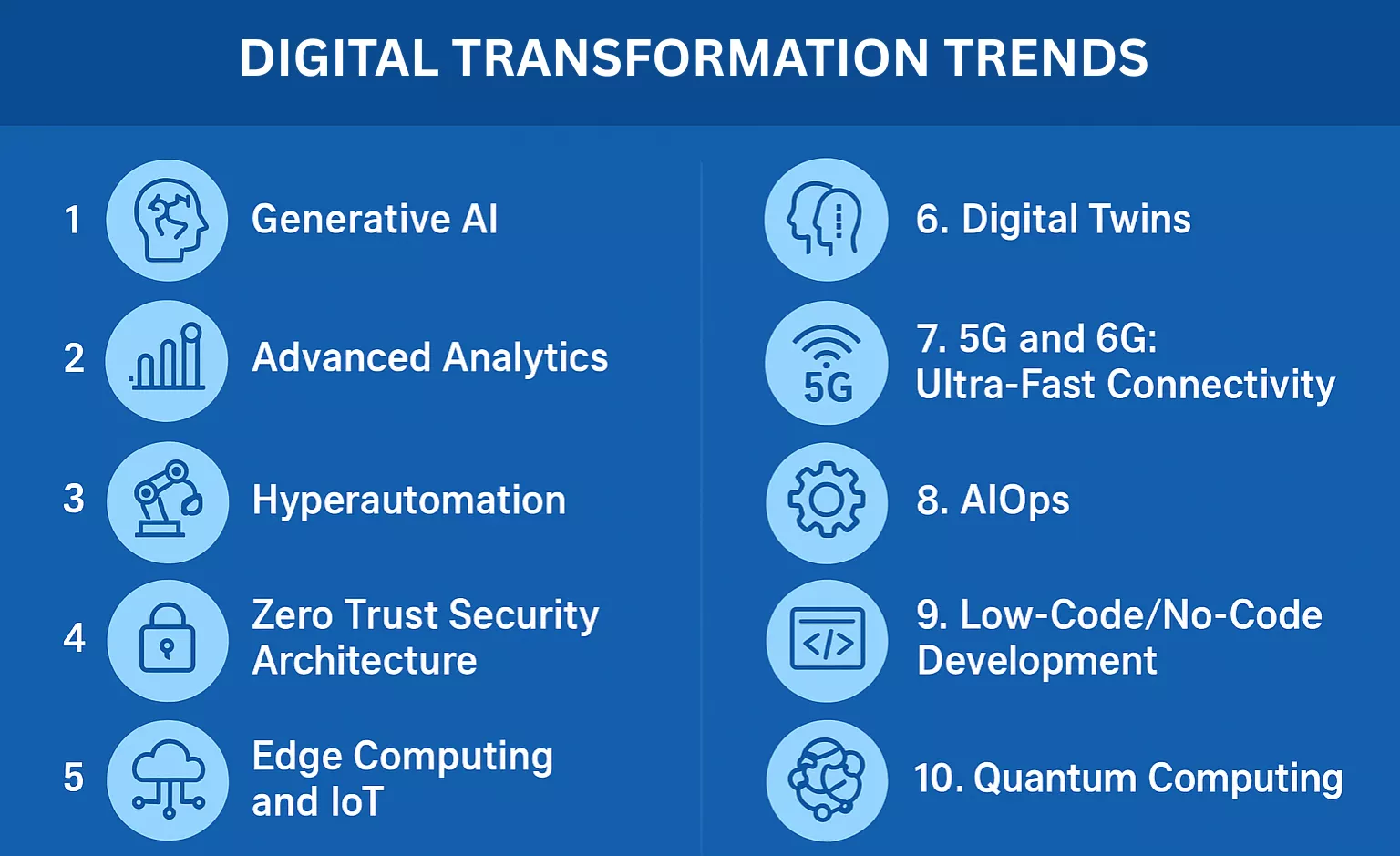
From supply chain management to financial transactions, businesses are exploring blockchain for boosted security and efficiency. Organizations are checking out the potential of 5G to make it possible for real-time information processing, boost IoT capabilities, and enhance overall effectiveness.
By carrying out RPA, businesses can improve productivity, minimize errors, and enhance workflows. Edge computing brings calculation and data storage closer to the source of data generation. This enables real-time data processing, reduces latency, and boosts total system performance for services running in a digital environment. As businesses continue to develop in a rapidly changing digital landscape, remaining abreast of key innovation patterns is important for future success.
Technology TrendImpact on BusinessArtificial Intelligence (AI) and Machine LearningEnables automation, personalization, and predictive analytics. Internet of Things (IoT)Improves operational efficiency, consumer experiences, and company designs. Big Data AnalyticsProvides important insights for notified decision-making and competitive benefit. CybersecuritySafeguards delicate information and preserves customer trust in a significantly digital world. Cloud ComputingOffers scalability, flexibility, and ease of access to data and applications.
Protecting the Future: Australia's 2026 AI Facilities RoadmapIn today's digital age, remaining abreast of the most current technological advancements is essential for companies intending to drive innovation, boost efficiency, and stay competitive in the market. One of the essential trends revolutionizing organizations is the increasing adoption of synthetic intelligence (AI) and artificial intelligence. These innovations empower organizations to automate procedures, analyze vast quantities of data, and gain important insights to make informed decisions.
Navigating the Future AI Convergence
Another considerable trend is the Web of Things (IoT), which allows devices to connect and communicate with each other to collect and exchange data. This interconnected network of devices is changing industries such as production, healthcare, and transportation by making it possible for remote tracking, predictive upkeep, and real-time tracking. Cloud computing is also playing a critical function in changing the service landscape.
The shift towards cloud-based options is allowing services to improve collaboration, enhance data security, and achieve functional dexterity. Cybersecurity remains a top priority for organizations as they navigate a progressively digital world. With the increase of cyber risks and information breaches, organizations are purchasing robust security measures such as encryption, multi-factor authentication, and security analytics to secure their delicate information and protect their digital assets.
5G networks will provide ultra-fast speeds and low latency, allowing smooth connection and powering ingenious applications such as self-governing lorries and enhanced truth. Blockchain innovation provides secure and transparent transactions through decentralized journals, creating new chances for safe and secure digital payments, smart agreements, and supply chain management. Its decentralized nature eliminates the need for intermediaries, enhancing trust and effectiveness in company transactions.
By leveraging quantum bits (qubits) rather of conventional bits, quantum computers can perform computations tremendously much faster, revolutionizing fields such as information encryption, drug discovery, and optimization. As companies browse the ever-evolving technological landscape, it is vital to accept these emerging patterns to drive innovation, improve productivity, and deliver exceptional client experiences.
It is crucial for businesses to embrace a proactive technique towards incorporating these innovations into their operations and remaining notified about the most recent advancements in the tech industry. Embracing these business technology trends will not just drive innovation and effectiveness however also pave the way for a future where technological developments form the way we live, work, and interact.
Emerging Technology Trends to Watch By 2026
Internet of ThingsFacilitating remote tracking, predictive maintenance, and real-time information analytics. Cloud ComputingEnabling scalability, flexibility, and cost-efficiency in data storage and access. CybersecurityProtecting delicate details, digital assets, and ensuring data privacy. As services continue to progress in the digital age, emerging technology trends play an essential role in shaping future techniques.
One significant impact of these emerging technologies is the optimization of company procedures. Automation through AI and artificial intelligence not just increases performance but also enables employees to concentrate on more strategic jobs. This shift in focus allows companies to improve their overall performance and deliver better results. Furthermore, the usage of blockchain innovation improves security and transparency in various markets.
The integration of IoT gadgets makes it possible for real-time information collection and analysis, leading to informed decision-making. By leveraging this data, companies can individualize customer experiences, launch targeted marketing campaigns, and predict future demand.
Embracing these patterns can assist organizations innovate, adjust to market demands, and future-proof their operations. Cloud computing, for circumstances, uses scalability, versatility, and cost-efficiency for organizations of all sizes. By migrating to the cloud, business can simplify processes, improve partnership, and gain access to information from throughout the world. This shift not just reduces IT facilities expenses however also boosts agility in reacting to market changes.

Latest Posts
Tracking the Business Impact of AI-Driven Transformation
Essential Enterprise Trends for 2026
Building a 2026 AI Blueprint